Stark Battery Tech Thread

Bold claims doesn't begin to cover it.
They're already known to over hype, like their "real world range world record" (see Ride Apart link above, that was done at an average speed under 20 km/h, which is ridiculous).

Eagerly waiting for real world tests, if this thing is real, we will know quite soon.
 
Verge motorcycles have been around since 2019 (before they took this name), I think they've been taking preorders since 2021 and I'm not sure how many motorcycles they have delivered yet (if they have delivered any).

Worldwide they have a grand total of 5 "stores": 3 in California plus 2 in Germany.

Delivery for the world's first solid state battery bikes will supposedly begin in Q1 2026. We shall see how this turns out in the next couple of months.
 
Yep, you can see a Blueish color at the begining, that in a normal use will be the charging state but not in this case

Also they are using the MX mapswitch, maybe for weight saving? :unsure::LOL:

View attachment 15456
That would be a great back-up for when you crash the phone. Now just something to activate that.

The MX buttons somehow are less prone to sticking (oddly since it is the same). Also it sticks out less.
 
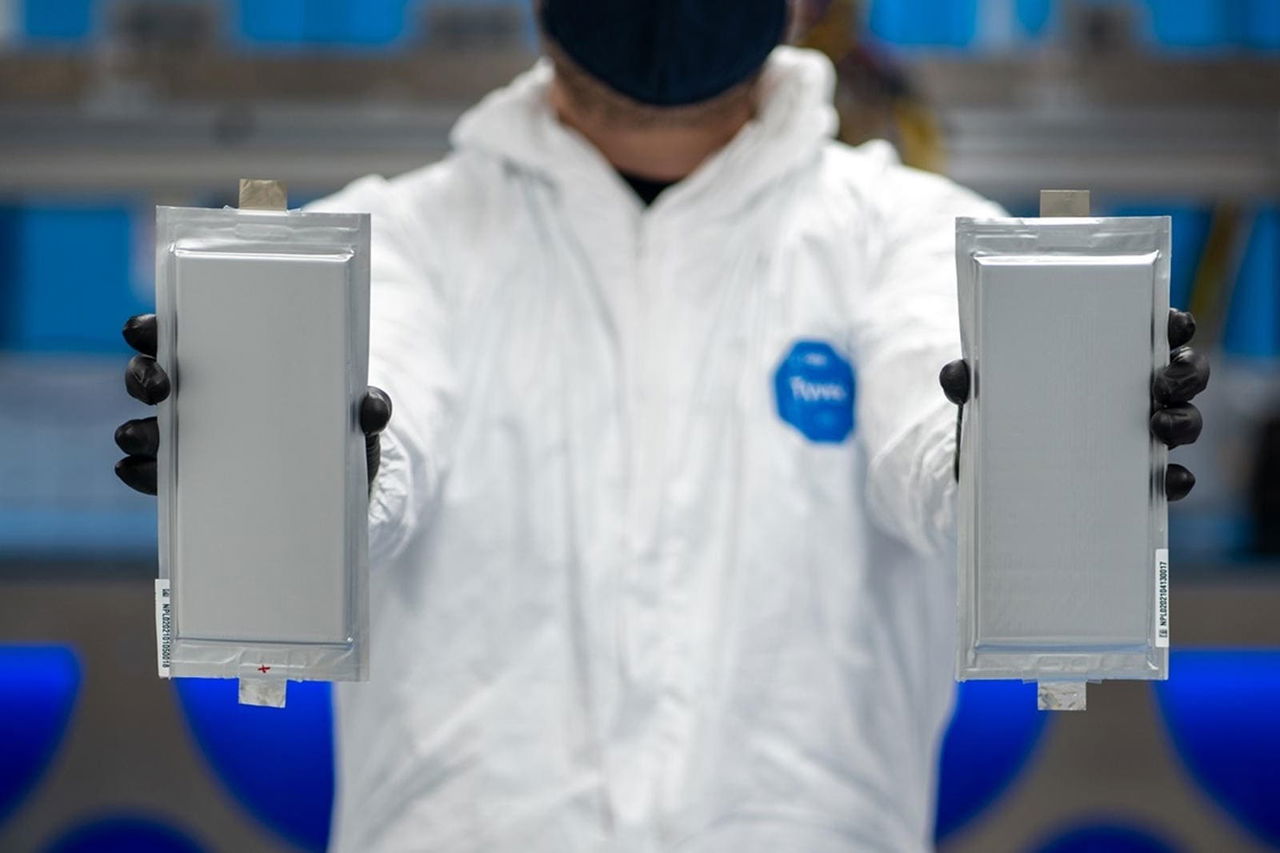
Maybe the over hype is real, but even if the charging cycles are 10,000 instead of 100,000, it's still an impressive improvement over the 500 of the Varg's lithium battery.

400 Wh/kg density is definitely true, and that density is already more than achieved with solid-state batteries. I think they exaggerate the most in the numbers and data from the range tests, but achieving 11 kWh in the Varg with this technology and ultra-fast charging, i think many of us would be more than happy. Or maybe a 8/9kwh battery with less weight for those who complain on that.


AAAAND, i found this article of SS problems, is in spanish, so i just use google translator for you:


-------------------------------------------------------------------------------------------------------------------------------------------------------------------------------------------------

"Dendrites also appear inside solid electrolytes
A team from the Technical University of Munich (TUM) has discovered an unexpected phenomenon that directly impacts the future of lithium-metal batteries with solid electrolytes. Dendrites, microscopic, needle-like metallic structures that can pierce internal layers and cause short circuits, don't just form at the interface between the electrode and the electrolyte—which was the assumption of virtually the entire industry. It has now been shown that they can also grow inside solid polymer electrolytes, precisely in the material that should prevent their formation.

Dendrites also appear in internal regions that were previously considered completely safe.
Polymeric electrolytes, made from plastic, transport lithium ions between the anode and cathode, just like a liquid electrolyte, but with greater stability and much greater safety: they don't ignite, they don't leak, and they separate the electrodes more reliably and safely. In fact, they are key to developing truly safe solid-state batteries.

The surprise comes from the fact that these electrolytes, which should act as a barrier, are also being penetrated by dendrites, and are even being generated within them. According to physicist Fabian Apfelbeck, lead author of the study published in Nature, measurements show that dendrite growth can begin inside the polymer electrolyte itself, far from any interface with the electrodes.

This result challenges one of the basic hypotheses of battery research. Professor Peter Müller-Buschbaum, head of the Chair of Functional Materials at TUM, summarizes it clearly: until now, it was assumed that dendrites only appeared at the boundary between materials. Seeing them grow "inside" forces a complete rethink, from the compounds used to the testing methods.

Why this matters: Solid-state batteries are not infallible
Solid-state batteries are the next big technological leap: they offer greater energy density (much longer runtime without increasing size) and greater safety thanks to the elimination of the flammable liquid electrolyte. But in practice, their development has been slow: stability and durability, but above all the enormous cost of mass production, remain unresolved problems. Now, this discovery adds an additional challenge.

An extremely precise technique using nanoscale X-ray scattering was required.
To visualize this microscopic behavior, the team of scientists used an extremely precise technique: wide-angle X-ray scattering with nanofocus at the German Electron Synchrotron DESY in Hamburg. With a beam of just 350 nanometers, they were able to observe for the first time how the interior of the polymer electrolyte changed in real time during charge and discharge cycles. To this end, they even developed a miniature cell capable of functioning like a real battery under X-ray diffraction.

The results were clear: dendrites appear not only in expected areas but also in internal regions that were previously considered completely safe. This has a direct and worrying consequence: using a solid electrolyte does not automatically guarantee that a solid-state battery is immune to short circuits. Therefore, a solid-state battery does not have zero risk of fire, as was generally assumed. This discovery necessitates redesigning materials, internal architectures, and testing protocols to prevent unwanted crystallization at the heart of the electrolyte."
 
Maybe the over hype is real, but even if the charging cycles are 10,000 instead of 100,000, it's still an impressive improvement over the 500 of the Varg's lithium battery.

400 Wh/kg density is definitely true, and that density is already more than achieved with solid-state batteries. I think they exaggerate the most in the numbers and data from the range tests, but achieving 11 kWh in the Varg with this technology and ultra-fast charging, i think many of us would be more than happy. Or maybe a 8/9kwh battery with less weight for those who complain on that.


AAAAND, i found this article of SS problems, is in spanish, so i just use google translator for you:


-------------------------------------------------------------------------------------------------------------------------------------------------------------------------------------------------

"Dendrites also appear inside solid electrolytes
A team from the Technical University of Munich (TUM) has discovered an unexpected phenomenon that directly impacts the future of lithium-metal batteries with solid electrolytes. Dendrites, microscopic, needle-like metallic structures that can pierce internal layers and cause short circuits, don't just form at the interface between the electrode and the electrolyte—which was the assumption of virtually the entire industry. It has now been shown that they can also grow inside solid polymer electrolytes, precisely in the material that should prevent their formation.

Dendrites also appear in internal regions that were previously considered completely safe.
Polymeric electrolytes, made from plastic, transport lithium ions between the anode and cathode, just like a liquid electrolyte, but with greater stability and much greater safety: they don't ignite, they don't leak, and they separate the electrodes more reliably and safely. In fact, they are key to developing truly safe solid-state batteries.

The surprise comes from the fact that these electrolytes, which should act as a barrier, are also being penetrated by dendrites, and are even being generated within them. According to physicist Fabian Apfelbeck, lead author of the study published in Nature, measurements show that dendrite growth can begin inside the polymer electrolyte itself, far from any interface with the electrodes.

This result challenges one of the basic hypotheses of battery research. Professor Peter Müller-Buschbaum, head of the Chair of Functional Materials at TUM, summarizes it clearly: until now, it was assumed that dendrites only appeared at the boundary between materials. Seeing them grow "inside" forces a complete rethink, from the compounds used to the testing methods.

Why this matters: Solid-state batteries are not infallible
Solid-state batteries are the next big technological leap: they offer greater energy density (much longer runtime without increasing size) and greater safety thanks to the elimination of the flammable liquid electrolyte. But in practice, their development has been slow: stability and durability, but above all the enormous cost of mass production, remain unresolved problems. Now, this discovery adds an additional challenge.

An extremely precise technique using nanoscale X-ray scattering was required.
To visualize this microscopic behavior, the team of scientists used an extremely precise technique: wide-angle X-ray scattering with nanofocus at the German Electron Synchrotron DESY in Hamburg. With a beam of just 350 nanometers, they were able to observe for the first time how the interior of the polymer electrolyte changed in real time during charge and discharge cycles. To this end, they even developed a miniature cell capable of functioning like a real battery under X-ray diffraction.

The results were clear: dendrites appear not only in expected areas but also in internal regions that were previously considered completely safe. This has a direct and worrying consequence: using a solid electrolyte does not automatically guarantee that a solid-state battery is immune to short circuits. Therefore, a solid-state battery does not have zero risk of fire, as was generally assumed. This discovery necessitates redesigning materials, internal architectures, and testing protocols to prevent unwanted cryst

Maybe the over hype is real, but even if the charging cycles are 10,000 instead of 100,000, it's still an impressive improvement over the 500 of the Varg's lithium battery.

400 Wh/kg density is definitely true, and that density is already more than achieved with solid-state batteries. I think they exaggerate the most in the numbers and data from the range tests, but achieving 11 kWh in the Varg with this technology and ultra-fast charging, i think many of us would be more than happy. Or maybe a 8/9kwh battery with less weight for those who complain on that.


AAAAND, i found this article of SS problems, is in spanish, so i just use google translator for you:


-------------------------------------------------------------------------------------------------------------------------------------------------------------------------------------------------

"Dendrites also appear inside solid electrolytes
A team from the Technical University of Munich (TUM) has discovered an unexpected phenomenon that directly impacts the future of lithium-metal batteries with solid electrolytes. Dendrites, microscopic, needle-like metallic structures that can pierce internal layers and cause short circuits, don't just form at the interface between the electrode and the electrolyte—which was the assumption of virtually the entire industry. It has now been shown that they can also grow inside solid polymer electrolytes, precisely in the material that should prevent their formation.

Dendrites also appear in internal regions that were previously considered completely safe.
Polymeric electrolytes, made from plastic, transport lithium ions between the anode and cathode, just like a liquid electrolyte, but with greater stability and much greater safety: they don't ignite, they don't leak, and they separate the electrodes more reliably and safely. In fact, they are key to developing truly safe solid-state batteries.

The surprise comes from the fact that these electrolytes, which should act as a barrier, are also being penetrated by dendrites, and are even being generated within them. According to physicist Fabian Apfelbeck, lead author of the study published in Nature, measurements show that dendrite growth can begin inside the polymer electrolyte itself, far from any interface with the electrodes.

This result challenges one of the basic hypotheses of battery research. Professor Peter Müller-Buschbaum, head of the Chair of Functional Materials at TUM, summarizes it clearly: until now, it was assumed that dendrites only appeared at the boundary between materials. Seeing them grow "inside" forces a complete rethink, from the compounds used to the testing methods.

Why this matters: Solid-state batteries are not infallible
Solid-state batteries are the next big technological leap: they offer greater energy density (much longer runtime without increasing size) and greater safety thanks to the elimination of the flammable liquid electrolyte. But in practice, their development has been slow: stability and durability, but above all the enormous cost of mass production, remain unresolved problems. Now, this discovery adds an additional challenge.

An extremely precise technique using nanoscale X-ray scattering was required.
To visualize this microscopic behavior, the team of scientists used an extremely precise technique: wide-angle X-ray scattering with nanofocus at the German Electron Synchrotron DESY in Hamburg. With a beam of just 350 nanometers, they were able to observe for the first time how the interior of the polymer electrolyte changed in real time during charge and discharge cycles. To this end, they even developed a miniature cell capable of functioning like a real battery under X-ray diffraction.

The results were clear: dendrites appear not only in expected areas but also in internal regions that were previously considered completely safe. This has a direct and worrying consequence: using a solid electrolyte does not automatically guarantee that a solid-state battery is immune to short circuits. Therefore, a solid-state battery does not have zero risk of fire, as was generally assumed. This discovery necessitates redesigning materials, internal architectures, and testing protocols to prevent unwanted crystallization at the heart of the electrolyte."
Interesting. Dendritic growth is a subtle problem in many electronic environments. I am more familiar with it in PCBs than batteries but I can see how that might happen.
 
Back
Top